
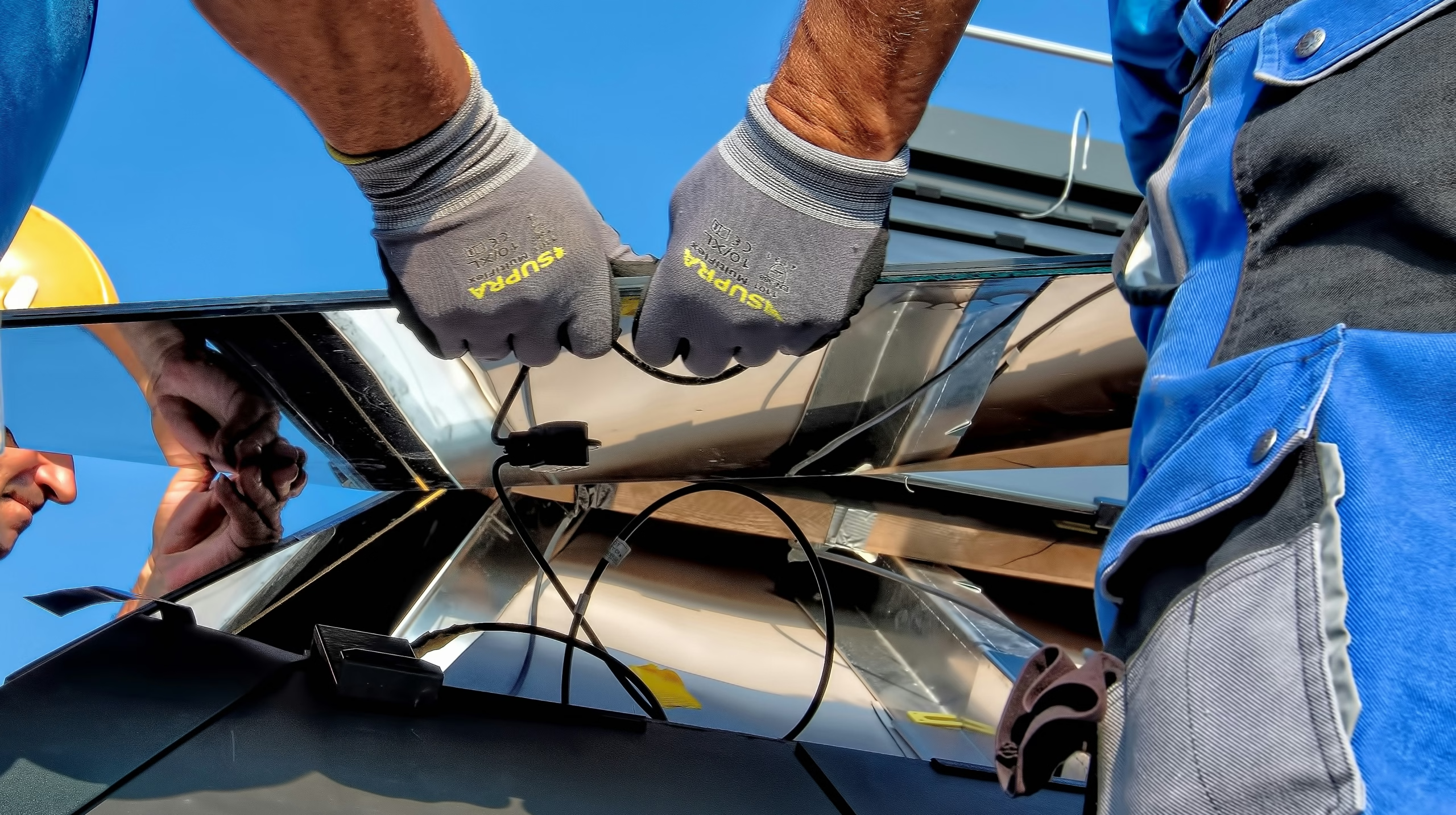
Introduction to Solar Thermal Energy Systems
Solar thermal energy systems represent a significant advancement in the utilization of solar energy for heating applications. These systems operate by absorbing sunlight and converting it into thermal energy, which can be utilized for various purposes, including residential heating, industrial processes, and agricultural activities. The core principle behind these systems involves the use of solar appliances that absorb solar radiation, transforming it into heat through various mechanisms.
The heart of solar thermal systems is the flat plate collector, a prominent example of a solar appliance that harnesses solar energy efficiently. These collectors consist of a panel that absorbs sunlight, which is then transferred to a fluid, typically water or antifreeze, circulating through the system. Flat plate collectors are widely used in both domestic and commercial settings due to their simplicity, reliability, and effectiveness in capturing direct and indirect sunlight.
Focusing type collectors represent another category of solar appliances, designed to concentrate sunlight onto a small area, enhancing the thermal energy produced. This technology proves particularly advantageous in generating higher temperatures, making it suitable for applications requiring substantial heat input, such as industrial heating and thermal power generation.
Solar air heaters, a subset of solar thermal systems, are specifically designed to heat air for space heating or ventilation purposes. By utilizing the sun’s energy, these devices can significantly reduce reliance on conventional heating methods, contributing to lowering of electricity bills and a reduced environmental pollution. The integration of solar thermal systems into agricultural engineering practices can be utilized for various purposes, as farmers adopt these technologies to enhance crop drying and greenhouse heating.
Incorporating solar thermal energy solutions represents a crucial step toward sustainable energy practices, emphasizing the need for cleaner and renewable alternatives. As the global demand for energy continues to grow, the role of solar thermal systems in providing effective solutions cannot be overstated.
Flat Plate Collectors
Principle
Flat plate collectors are a type of solar thermal device designed to capture sunlight and convert it into usable heat. The core principle behind flat plate collectors involves the absorption of solar radiation by a flat surface, usually coated with a selective material that maximizes heat retention. This energy is then transferred to a fluid, typically water or air, which is circulated through the collector to heat spaces or fluids for various applications, including domestic heating and agricultural processes. The efficient design of these collectors makes them well-suited for integration within solar appliances.
Advantages
Advantages of Flat Plate Collector (FPC):
- Simple and Robust Design
- FPCs have a straightforward construction with no moving parts, making them mechanically reliable and easy to maintain.
- Low Maintenance
- Due to their simple design and lack of complex components, they require minimal upkeep compared to other solar collectors.
- Cost-Effective
- FPCs are cheaper to manufacture and install compared to more complex systems like evacuated tube collectors (ETCs) or concentrating collectors.
- Suitable for Low to Moderate Temperatures
- Ideal for applications requiring temperatures between 30°C to 80°C, such as domestic water heating, space heating, and drying of agricultural products.
- Durable and Long-Lasting
- With proper materials and coatings (like selective surfaces and tempered glass), FPCs can last for 15–20 years or more.
- No Need for Sun Tracking
- FPCs can work efficiently under fixed installation without requiring solar tracking systems, reducing operational complexity.
- Efficient Use of Diffuse Radiation
- They can absorb both direct and diffuse solar radiation, making them effective even under partly cloudy conditions.
- Environment-Friendly
- As a renewable energy device, FPCs contribute to the reduction of fossil fuel consumption and greenhouse gas emissions.
- Wide Range of Applications
- Used in domestic, agricultural, and industrial applications including water heating, solar cooking, pasteurization, and pre-heating for boilers.
Disadvantages
Disadvantages of Flat Plate Collector (FPC):
- Lower Efficiency Compared to Other Collectors
- FPCs have lower thermal efficiency than evacuated tube collectors (ETCs), especially at higher temperatures or in colder climates.
- Heat Losses
- Significant heat losses can occur due to conduction, convection, and radiation, especially in windy or cold conditions.
- Heavy and Bulky
- FPCs are larger and heavier than some alternatives, making transportation, handling, and installation more difficult.
- Performance Drops in Cloudy or Cold Weather
- Although they can utilize diffuse radiation, their performance drops significantly in consistently overcast or cold regions.
- Fixed Orientation
- Since FPCs are usually fixed in one position, they cannot track the sun, which limits their efficiency compared to tracking systems.
- Fragility of Glass Cover
- The transparent glass cover is prone to breakage from hail, strong winds, or debris impact, increasing the risk of damage.
- Scaling and Corrosion Issues
- In hard water areas or when exposed to aggressive weather conditions, the internal piping may suffer from scaling or corrosion without proper treatment.
- Limited Temperature Range
- Not suitable for high-temperature applications (above ~80°C), limiting their use in industrial processes that require higher heat.
Dimensions of flat plate collectors can vary, but a common size ranges from 1.5 to 2 meters in length and 1 to 1.5 meters in width. This standardization enables compatibility with existing solar appliances and systems. However, it’s essential to consider both the advantages and disadvantages associated with these collectors. Among the benefits, flat plate collectors are relatively low-cost, easy to install, and require minimal maintenance, making them appealing for both residential and agricultural engineering applications. Conversely, they are less effective in areas with limited sunlight and may lose efficiency in extreme temperatures, which highlights the importance of appropriate application and selection in the implementation of solar energy solutions.
Cylindrical Parabolic Concentrating Collectors
Cylindrical parabolic concentrating collectors (CPCCs) are a significant technology within the broader category of solar appliances, primarily used for producing thermal energy. These collectors utilize a parabolic-shaped reflective surface that focuses sunlight onto a linear receiver, effectively converting solar energy into usable heat. This mechanism is predicated on the principles of optics and energy conservation, where the shape of the parabolic reflector ensures that incoming parallel rays of sunlight are concentrated at a single focal point, where the receiver is installed. This design results in significantly higher temperatures than flat plate collectors, making CPCCs particularly advantageous for various applications in agriculture engineering and beyond.
Several models of cylindrical parabolic collectors exist, varying in dimensions and configurations. Commonly, these collectors range in width from 0.5 to 1.5 meters, with lengths spanning several meters, allowing for significant heat absorption area. The choice of dimensions is often influenced by the specific thermal needs of the application, whether it be agricultural heating processes or industrial uses. Furthermore, these collectors can be engineered to accommodate different geographic and climate conditions, enhancing their versatility in harnessing solar energy efficiently.
Despite their higher efficiency in comparison to flat plate systems, CPCCs come with certain disadvantages. Their complexity in design demands more substantial initial investment and maintenance costs. Installation entails precise alignment and advanced engineering considerations, which can deter users who are looking for simpler solar appliance options. However, for applications requiring substantial thermal energy output, the higher performance of cylindrical parabolic concentrators often justifies the investment. As a result, understanding these intricate devices is crucial for those engaged in solar thermal applications, especially in sectors intimately connected with agriculture engineering.
Advantages
- High Thermal Efficiency
- The parabolic reflector focuses a large area of sunlight onto a narrow absorber tube, significantly increasing heat collection efficiency.
- Single-Axis Tracking
- It only requires tracking the sun in one direction (typically east–west), reducing mechanical complexity and energy consumption.
- Uniform Heating of Absorber
- The concentric absorber design helps distribute heat evenly along the tube, reducing thermal stress and improving heat transfer.
- Modular and Scalable Design
- The system can be expanded or reduced in size easily, making it suitable for small-scale domestic use or large-scale industrial installations.
- Low Heat Losses
- The absorber is often enclosed in a vacuum-sealed glass tube or with insulation, which minimizes heat loss from convection and radiation.
- Simpler Construction and Maintenance
- The cylindrical shape is easier to fabricate than paraboloidal dishes, and the structure is mechanically more stable and less costly to maintain.
- Versatility in Heat Transfer Fluids
- Can operate using different fluids like thermal oil, water, or air, making it adaptable to various temperature and pressure requirements.
- Efficient in Medium Temperature Range
- Ideal for processes requiring temperatures between 100°C and 400°C, such as water heating, solar cooking, or process heat in industries.
Disadvantages
- Requires Tracking System
- Though simpler than dual-axis, the single-axis tracking still adds cost and maintenance requirements.
- Ineffective on Cloudy Days
- CPCCs rely on direct solar radiation and perform poorly under diffuse light or cloudy weather.
- Fixed Orientation Limitations
- Fixed-axis systems may not capture optimal sunlight throughout the year without seasonal adjustment.
- Complex Alignment
- Precise alignment of the parabolic reflector with the sun is necessary for efficient operation, requiring regular calibration.
- High Initial Cost
- The setup involves reflectors, tracking mechanisms, and insulation materials, which raise the initial investment.
- Heat Loss in Non-Vacuum Systems
- If vacuum insulation isn’t used, significant heat loss can occur through conduction and convection.
- Large Area Requirement
- The trough design needs long, unobstructed space for installation, which can be a constraint in urban or hilly areas.
- Not Suitable for Very High Temperatures
- Unlike solar dishes, CPCCs can’t efficiently achieve temperatures above ~400°C, limiting their use in high-temperature applications like power turbines.
Paraboloid Concentrating Collectors
Paraboloid concentrating collectors represent a specialized segment of solar appliances designed to harness solar energy through a highly efficient method of concentration. These collectors generally comprise a parabolic mirror that focuses sunlight onto a receiver positioned at the focal point of the parabola, enabling the conversion of thermal energy into usable heat. The operational principle is predicated on the geometric properties of the parabola, where incoming parallel rays of sunlight are concentrated to a single point, thus maximizing the amount of solar energy captured.
One of the hallmark features of paraboloid concentrating collectors is their capacity for significant heat generation, making them suitable for various applications, particularly in the agriculture engineering sector. These systems can reach higher temperatures than traditional flat plate collectors, allowing for enhanced efficiency in processes such as water heating, drying agricultural produce, or even powering steam turbines for electricity generation. The ability to achieve high thermal conversion efficiencies makes paraboloid collectors an appealing option for systems requiring substantial energy input.
While their advantages are noteworthy, paraboloid concentrating collectors are not without their challenges. The requirement for precise alignment with the sun and the complexity of their design often necessitate a higher level of technical skill for installation and ongoing maintenance compared to simpler solar appliances. Additionally, the models are typically larger and more nuanced in terms of setup, which might limit their adoption in smaller-scale applications. Despite these drawbacks, the versatility and efficiency of paraboloid concentrating collectors render them a valuable asset in the rapid advancement of solar energy technologies, particularly within fields focused on sustainable agriculture practices.
Advantages
- High Solar Concentration Ratio
- The parabolic shape focuses sunlight onto a narrow receiver tube, increasing thermal energy collection efficiency.
- Simple Single-Axis Tracking
- Requires only one-axis solar tracking, which simplifies the mechanism and reduces operational complexity.
- Efficient for Medium-Temperature Applications
- Ideal for generating temperatures between 100°C and 400°C, suitable for water heating, drying, and industrial process heat.
- Scalable Design
- Easily scaled for both small and large systems, from domestic solar water heaters to large solar thermal power plants.
- Reduced Heat Loss
- The receiver tube is often enclosed in a vacuum glass envelope, minimizing heat loss due to convection and conduction.
- Mechanically Stable and Durable
- The linear structure is robust and can withstand wind and weather conditions with proper design.
- Versatile Heat Transfer Fluids
- Can operate using various fluids like thermal oil, pressurized water, or air, offering flexibility in design.
- Commercially Proven Technology
- PCCs are a well-established and commercially tested technology with many successful installations worldwide.
Disadvantages
- Dependence on Direct Sunlight
- PCCs work efficiently only with direct solar radiation, making them ineffective in cloudy or diffuse light conditions.
- Requires Single-Axis Tracking
- Though simpler than dual-axis systems, the tracking mechanism adds cost, energy consumption, and maintenance needs.
- Complex Manufacturing and Installation
- Precise parabolic shape and accurate alignment of the receiver tube are necessary for optimal performance, increasing installation complexity.
- Limited Temperature Range
- Not suitable for applications requiring very high temperatures (>400°C), limiting its use in advanced thermal power cycles.
- Large Space Requirement
- Requires long, open, and shadow-free areas for installation, making it less suitable for densely populated or hilly regions.
- Heat Losses Without Vacuum Insulation
- Systems without vacuum-sealed receiver tubes may suffer significant thermal losses, reducing overall efficiency.
- Difficult to Integrate with Storage Systems
- Thermal energy storage for PCCs (e.g., molten salts) can be technically challenging and expensive.
- Not Ideal for Small-Scale or Residential Use
- The size, tracking requirement, and infrastructure make it less feasible for small or household installations.
Solar Air Heaters
Solar air heaters are innovative devices that convert solar energy into heat, primarily used for heating air in various applications, ranging from residential settings to agricultural purposes. The fundamental principle behind these appliances is the absorption of sunlight through solar collectors, which subsequently warms the air that passes through them. Typically, they consist of a flat collector, a heat transfer fluid, and a blower or fan for air circulation. The efficiency of these systems largely depends on the design of the collector and the materials used.
Various models of solar air heaters exist, including flat plate collectors and focusing type collectors. Flat plate collectors are the most common, featuring a simple structure with a dark surface that absorbs sunlight. These collectors generally range from 1.2 to 3.0 square meters in area, making them suitable for homes and small businesses. Focusing type collectors, on the other hand, utilize mirrors or lenses to concentrate sunlight onto a smaller surface area, resulting in higher temperatures. These systems are often employed in larger scale applications such as industrial heating processes.
One significant advantage of solar air heaters is their cost-effectiveness. By utilizing solar energy, households and businesses can substantially reduce heating expenses and minimize reliance on non-renewable energy sources. Additionally, solar air heaters generally require low maintenance, with periodic cleaning and inspection being sufficient to ensure optimal operation. However, these systems also come with drawbacks. The efficiency of solar air heaters can be significantly compromised in colder climates, where heat loss occurs more rapidly and sunlight availability is limited. Furthermore, design variations can lead to discrepancies in performance, necessitating careful consideration of local climatic conditions and specific heating requirements.
In conclusion, understanding the mechanisms and design of solar air heaters is essential for leveraging their benefits as sustainable alternatives for energy needs. By embracing these solar appliances, users can promote sustainable practices while also achieving notable cost savings.
Innovations in Solar Technologies
The landscape of solar appliances is undergoing significant transformation, driven by recent innovations and advancements in solar thermal energy systems. Emerging technologies are enhancing the efficiency and effectiveness of solar appliances, especially flat plate collectors and focusing type collectors. These developments are crucial in addressing energy needs while promoting sustainability.
One of the most notable advancements is the improvement in materials used in solar thermal systems. Researchers are focusing on high-performance polymers and advanced coatings that reduce heat loss and enhance absorption. These materials not only increase the efficiency of solar appliances but also extend their lifespan, making them a more viable option for agriculture engineering applications. The use of nanomaterials is also gaining traction, as they offer unique properties that significantly optimize solar energy collection and conversion.
Design innovations are another focal point in the evolution of solar thermal systems. Sophisticated designs of flat plate collectors now incorporate advanced geometries that maximize solar exposure and improve heat transfer. Furthermore, focusing type collectors are being integrated with augmented optics, allowing them to track sunlight more effectively. This adaptability is particularly beneficial in supporting a wide range of applications, from residential uses to large-scale agricultural projects, enhancing the role of solar energy in modern farming.
Moreover, the integration of smart technologies is revolutionizing how solar appliances operate. By leveraging the Internet of Things (IoT), solar thermal systems can now monitor performance in real-time, optimize energy intake, and adjust functionalities based on environmental conditions. This convergence of smart technology with solar energy systems enables more efficient resource management and energy consumption, vital for sustainable agriculture engineering.
Overall, the continuous innovations in solar technologies signify a promising future for solar thermal solutions, with flat plate collectors and focusing type collectors at the forefront of this transformation. As research progresses and technology evolves, solar appliances will play an increasingly pivotal role in harnessing solar energy effectively.
Installation and Maintenance Tips for Solar Appliances
Installing solar appliances, such as flat plate collectors, focusing type collectors, and solar air heaters, requires careful planning and execution to ensure optimal performance. Begin by selecting a suitable location that receives ample sunlight—at least 4 to 6 hours of direct sunlight per day is ideal for maximizing solar energy utilization.
- Flat plate collectors should be installed at an angle relative to the latitude of the installation site to capture solar radiation effectively. This angle may vary slightly based on seasonal changes; therefore, adjustments might be necessary to maintain efficiency throughout the year.
- When installing focusing type collectors, it’s crucial to ensure that the reflector surfaces are clean and free from obstructions that could cast shadows. These systems often require precise alignment toward the sun for maximum energy capture, so consider using tracking systems for enhanced performance. Proper mounting is also essential to withstand wind and weather conditions, which can affect stability and durability
Regular maintenance plays a critical role in the effectiveness of solar appliances. It is advisable to regularly clean the surfaces of flat plate collectors and focusing type collectors to remove dust, dirt, and any debris that may hinder their efficiency. This should be done using non-abrasive cleaning materials suitable for glass surfaces. Similarly, solar air heaters need periodic inspections to ensure that there’s no buildup of material that could impede airflow, affecting their performance.
Additionally, safety is paramount during both installation and maintenance. Always adhere to local regulations and safety standards, using personal protective equipment (PPE) when required. Moreover, familiarize yourself with troubleshooting common issues, such as low performance due to shading or mechanical failures, as these can significantly impact the overall effectiveness of your solar appliances.
The Future of Solar Thermal Energy
As we confront the realities of climate change and the urgent need for sustainable energy solutions, the role of solar thermal energy systems becomes increasingly significant. Solar appliances, including flat plate collectors and focusing type collectors, have been proven to be effective technologies that utilize solar energy for various applications, including domestic heating and agricultural purposes. The integration of solar thermal systems not only reduce reliance on fossil fuels but also contributes in decreasing greenhouse gas emissions, thereby promoting environmental sustainability.
The advantages of solar thermal technology are manifold. By utilizing solar thermal energy, users can potentially reduce their energy costs while simultaneously lowering their carbon footprint. In sectors such as agriculture, engineering students and professionals can leverage this technology to enhance energy efficiency in irrigation systems, greenhouses, and other agricultural practices. Advanced applications of solar appliances in the agricultural engineering field demonstrate promising prospects for sustainable farming methods and energy-efficient practices.
We have explored the functionalities and benefits of various solar thermal systems, emphasizing the importance of opting for renewable energy sources in combating global warming. The versatility and adaptability of solar appliances showcase their potential as a viable energy solution for residential, commercial, and agricultural sectors alike. Given the pressing need for innovative energy solutions, solar thermal technology stands out as a beacon of hope in the transition towards a more sustainable energy future.
Ultimately, as people recognize the value of solar energy in mitigating climate challenges, the adoption of solar thermal systems will continue to rise. The future of solar thermal energy not only promises to enhance energy efficiency but also represents a vital step toward achieving a sustainable and environmentally responsible society.

Leave a Reply
You must be logged in to post a comment.