
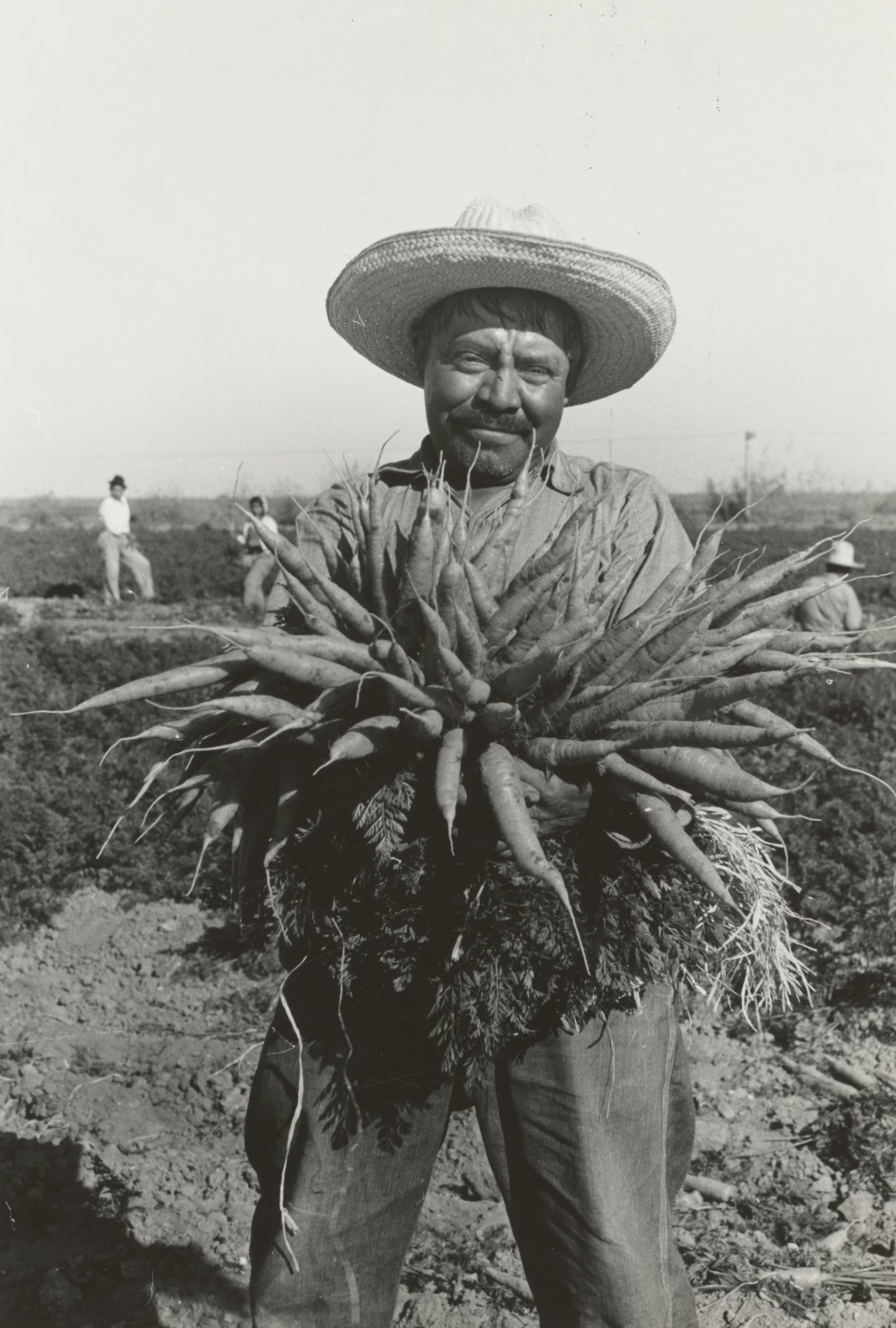
Introduction to Credit in Agriculture
Credit plays a crucial role in the agricultural sector, enabling farmers and agribusinesses to access the necessary funds to invest in various aspects of their operations. As agriculture is inherently reliant on timely investments, obtaining credit opens doors for farmers to purchase seeds, fertilizers, equipment, and livestock. The availability of credit not only supports individual farmers in their pursuits but also contributes to overall sector growth by improving production capacities.
Within agriculture, credit can come from various sources including commercial banks, cooperatives, microfinance institutions, and government programs. Each source offers different types of credit products tailored to meet the diverse needs of agricultural stakeholders. These may include short-term loans for purchasing inputs or long-term loans for acquiring land and machinery. Consequently, understanding the classification of credit is essential for farmers to select the most suitable options that align with their financial circumstances and production goals.
The significance of agriculture credit extends beyond mere monetary transactions; it is a critical enabler of technological advancement and sustainable practices in farming. Access to credit empowers farmers to invest in modern agricultural techniques, fostering increased productivity and crop yields. Moreover, credit allows for risk management by providing a financial buffer during unforeseen circumstances, such as natural disasters or market fluctuations. Therefore, comprehensive insights into credit mechanisms and their classifications within the agricultural framework equip stakeholders with the knowledge to make informed financial decisions, ultimately enhancing the productivity and sustainability of the agriculture sector.
Meaning and Definition of Credit
Credit is a fundamental concept in finance that refers to the ability of a borrower to obtain goods, services, or money from a lender based on a promise to repay in the future. It acts as a crucial mechanism enabling individuals and businesses, particularly in agriculture, to access necessary resources for operational growth and development. In essence, credit provides farmers and agricultural organizations the financial support needed to invest in essential inputs, technology, and infrastructure that can enhance productivity and sustainability.
The relationship between lenders and borrowers is pivotal in the context of credit. Lenders, which can include banks, financial institutions, or private investors, assess the creditworthiness of potential borrowers to determine the risk of non-repayment. This assessment often involves examining the borrower’s credit history, income sources, and current financial obligations. For agricultural stakeholders, the classification of credit is particularly relevant. Credit can be categorized into various types, such as short-term, medium-term, or long-term credit, each serving a distinct purpose in financing agricultural activities.
Access to agriculture credit facilitates farmers in acquiring seeds, fertilizers, equipment, and other vital resources that contribute to higher yields and more robust production systems. For instance, short-term credit might be used for seasonal crop inputs, while long-term credit could finance substantial investments like irrigation systems or land purchases. The implications of credit for agricultural development are significant, as it influences not only the individual farmer’s success but also the broader economic stability and growth of the agricultural sector. Thus, understanding the mechanisms of credit and its classifications is essential for optimizing agricultural financing and fostering long-term growth.
Importance of Credit in Agriculture
Credit plays a vital role in the agricultural sector, furnishing farmers and agricultural practitioners with the necessary financial resources to enhance productivity and operational efficiency. The availability of agriculture credit enables farmers to address immediate needs such as purchasing seeds, fertilizers, and equipment. These resources facilitate the optimization of crop yield and quality, which is critical for sustaining food supply and supporting local economies.
Furthermore, the inherent risks associated with agriculture, including unpredictable weather patterns, pests, and market fluctuations, necessitate adequate financial backing. Credit serves as a safety net, allowing farmers to mitigate these risks by planning for downturns and maintaining operational continuity during adverse conditions. Access to credit ensures that farmers can invest in risk management strategies, such as insurance policies and sustainable farming practices, thereby enhancing their resilience against uncertainties.
Investment in long-term agricultural projects is another significant aspect where credit plays an essential part. Farmers often require substantial capital for infrastructure development, such as building irrigation systems or storage facilities. Such investments are fundamental in enhancing productivity and thereby contributing to food security. By securing agriculture credit, farmers can implement improvements that lead to higher efficiency and sustainability in their operations. This aligns with broader goals of economic growth within the farming community, as enhanced productivity not only supports individual farmers but also strengthens local economies and markets.
In conclusion, the role of credit in agriculture cannot be overstated. It supports farmers in meeting immediate needs, managing risks, and investing in long-term sustainability efforts, ultimately contributing to food security and economic development. Understanding the classification of credit and its applications will further enable agricultural practitioners to leverage these resources effectively.
Classification of Credit Based on Time
The classification of credit in agriculture is crucial for meeting the diverse financial needs of farmers and agricultural enterprises. One significant way to categorize agricultural credit is based on the time dimension, which encompasses short-term, medium-term, and long-term credit. Each category serves unique purposes and caters to specific financial requirements in the agricultural sector.
Short-term credit typically spans a duration of less than one year. This type of credit is generally utilized for immediate needs during the crop production cycle. Farmers often need short-term credit to cover expenses such as purchasing seeds, fertilizers, and pesticides. For instance, a farmer might acquire short-term credit to finance the initial costs of planting a new crop before expected revenues from sales occur later in the growing season.
Medium-term credit, on the other hand, usually falls within the range of one to five years. This credit classification is often employed for purchasing equipment, livestock, or funding other productive investments that can yield returns over a moderate period. An example of medium-term credit use can be observed when a farmer acquires a tractor to increase efficiency on their farm. The investment in machinery not only facilitates immediate operational needs but also enhances productivity over several years.
Lastly, long-term credit is characterized by repayment periods exceeding five years and is primarily directed towards significant capital investments such as land acquisition, infrastructure development, or large-scale irrigation systems. For example, a farmer may secure long-term credit to finance the construction of a new barn or the expansion of existing facilities. Each classification of credit plays a vital role in enabling agricultural growth by aligning financial resources with specific operational timelines and needs.
Classification of Credit Based on Purpose
Credit in agriculture can be classified based on its intended purpose, which is vital for addressing the diverse financial needs of farmers. The major classifications include production credit, investment credit, and consumption credit, each serving unique functions within agricultural operations.
Production credit is designed to help farmers finance the day-to-day operational costs associated with crop and livestock production. This form of credit generally covers expenses like seeds, fertilizers, pesticides, fuel, and labor. It plays a crucial role in ensuring that farmers can maintain a steady production cycle, ultimately contributing to the overall stability of the agricultural sector. By securing production credit, farmers can optimize their operations, leading to higher yields and profitability.
Investment credit, on the other hand, is utilized for long-term capital expenditures which enhance the productive capacity of agricultural enterprises. This credit type supports significant investments in machinery, equipment, land, and infrastructure improvements. By providing farmers access to investment credit, financial institutions enable them to adopt new technologies, expand their operations, and improve efficiency. The ability to make such investments is essential for sustaining growth in the agriculture sector and meeting the demands of an ever-changing market.
Lastly, consumption credit is focused on the personal consumption needs of farmers and their families. This type of credit can be used for purchasing essential goods and services such as home improvement or educational expenses. Although it is not directly linked to agricultural production, consumption credit is crucial for maintaining farmers’ livelihoods and overall well-being. It ensures that rural populations can invest in their families’ futures while continuing to support their farming activities.
Understanding these different classifications of credit can significantly influence decision-making processes for farmers, allowing them to select the most appropriate financing options tailored to their specific needs and circumstances.
Classification of Credit Based on Security
Credit in the agricultural sector can be classified based on the security provided by borrowers, which primarily falls into two categories: secured credit and unsecured credit. Understanding these distinctions is crucial for farmers seeking agriculture credit, as the type of credit affects not only access but also financial risk management.
Secured credit requires the borrower to provide collateral as a guarantee against the loan. In agriculture, this collateral may include farmland, machinery, or livestock. The security provided decreases the lender’s risk; thus, secured loans tend to have lower interest rates compared to unsecured loans. If the borrower defaults, the lender has the right to seize the collateral, thereby mitigating potential losses. This type of credit is often favored by agricultural producers, as it encourages lenders to offer favorable terms knowing that the loan is backed by tangible assets.
On the other hand, unsecured credit does not require any collateral; however, it comes with its own set of challenges and risks. Loans of this nature are often granted based on the borrower’s creditworthiness, business plan, and financial history. For many agricultural borrowers, obtaining unsecured credit can be difficult, particularly for those with less established credit histories. The absence of collateral increases the lender’s risk, leading to higher interest rates and possibly more stringent repayment terms. This type of credit may be necessary for operational needs that cannot be funded through secured loans.
Farmers must carefully assess their financial situation when considering the classification of credit that suits their needs. Understanding the nuances between secured and unsecured credit is essential for informed decision-making. Ultimately, the right type of credit can foster agricultural growth and sustainability.
Classification of Credit Based on Lender
In the realm of agriculture credit, understanding the various sources of funding is vital for farmers and agribusinesses alike. Credit can be classified based on the lender providing it, with two primary categories emerging: formal and informal lending sources. Each type presents unique advantages and disadvantages that impact the agricultural landscape.
Formal lending institutions typically consist of banks, credit unions, and agricultural cooperatives. These organizations offer structured credit products tailored to the specific needs of the agricultural sector. For instance, banks provide long-term loans for equipment purchases or land acquisition, while credit unions may offer lower interest rates due to their nonprofit status. Agricultural cooperatives often disperse credit to their members, allowing farmers to access favorable rates based on their collective bargaining power. The primary benefits of formal lending include regulated interest rates, potential tax benefits, and the professional advisory services that accompany many financial products. However, they can have stringent eligibility criteria and lengthy application processes, which may deter some borrowers.
On the other hand, informal lending sources include private lenders, friends, family, and community-based organizations. These lenders are often more flexible regarding repayment terms and requirements, making them accessible to those who might face challenges qualifying for formal credit. However, informal credit may carry higher interest rates and the risk of strained personal relationships, should repayment issues arise. Therefore, while informal lending can offer quick access to funds, borrowers must weigh the consequential factors carefully.
In essence, the classification of credit based on the lender plays a crucial role in determining which financing options are suitable for agricultural borrowers. By understanding both formal and informal sources, agricultural entrepreneurs can make more informed decisions regarding their credit needs, ultimately fostering a more sustainable agricultural economy.
Classification of Credit Based on Borrower
In the realm of agriculture, the classification of credit based on borrowers plays a crucial role in understanding the diverse financial needs of the agricultural sector. Borrowers can be broadly categorized into three primary groups: individual farmers, farming cooperatives, and agribusiness enterprises. Each of these categories presents unique credit needs and challenges that influence their borrowing decisions.
Individual farmers constitute the most basic category within agricultural credit. They often seek funding to finance their operations, purchase seeds, fertilizers, equipment, and manage day-to-day expenses. Individual farmers typically face challenges such as limited access to collateral, fluctuating market prices, and unpredictable weather patterns that can impact their ability to repay loans. Therefore, financial institutions may assess their creditworthiness based on past performance, existing assets, and cash flow analyses. Tailoring credit products to meet the individual needs of these farmers is essential for ensuring their sustainability.
Farming cooperatives present a different scenario. These entities are formed by groups of individual farmers who join forces to leverage collective buying power and maximize production efficiency. Credit needs for cooperatives often arise from large-scale requirements, such as bulk purchasing of inputs or investment in shared equipment and facilities. However, cooperatives may face challenges related to governance, member engagement, and shared responsibilities in repayment, which lenders must consider when evaluating credit applications.
Lastly, agribusiness enterprises, which encompass a broad range of activities including processing, marketing, and distribution of agricultural products, have distinct credit needs. These businesses often require larger sums of capital for expansion, innovation, and adherence to quality standards. While agribusinesses may have more access to credit compared to individual farmers, they also face unique risks including market competition and regulatory pressures. Understanding these differing needs and challenges associated with each borrower category is essential for developing effective credit solutions tailored to the agricultural industry.
Conclusion and Future Outlook
Understanding the credit needs in agriculture is essential for fostering a sustainable agricultural sector. Throughout this blog post, we’ve examined the various classifications of credit distinct to the agricultural industry, as well as the importance of such financing solutions in promoting growth and innovation among farmers. Access to agriculture credit is not merely a financial necessity; it is a driver for technological advancement, resilience, and adaptability in the face of ever-changing market conditions.
As we look to the future, it is crucial to consider emerging trends that might redefine the landscape of agricultural finance. One significant factor is the rise of digital technology and fintech solutions, which have the potential to streamline credit access for farmers. Digital platforms can facilitate quicker loan processing and offer more tailored financial products, thus ensuring that farmers, especially smallholders, can obtain financing suited to their unique circumstances. Capturing data through technology allows for more accurate risk assessments, which can lead to better decision-making in credit allocation.
Additionally, advancements in policy frameworks will be vital in addressing the challenges that farmers face in accessing credit. Governments and financial institutions must collaborate to create supportive environments that foster financial literacy and provide risk mitigation tools, thereby increasing farmers’ confidence in acquiring credit. Furthermore, as climate change continues to impact agricultural productivity, access to Agriculture credit will likely focus not only on operational costs but also on sustainability initiatives. This shift highlights the importance of integrating environmental considerations into credit offerings.
In conclusion, the future of credit in agriculture holds promise, but it also requires ongoing adaptation to meet the evolving needs of farmers. By embracing technological innovations and supportive policies, we can enhance credit access in agriculture, ultimately contributing to food security and economic stability in rural communities.

Leave a Reply
You must be logged in to post a comment.